ADVERTISEMENT
Mediterranean Greek Salad (Horiatiki-Inspired Garden Salad)
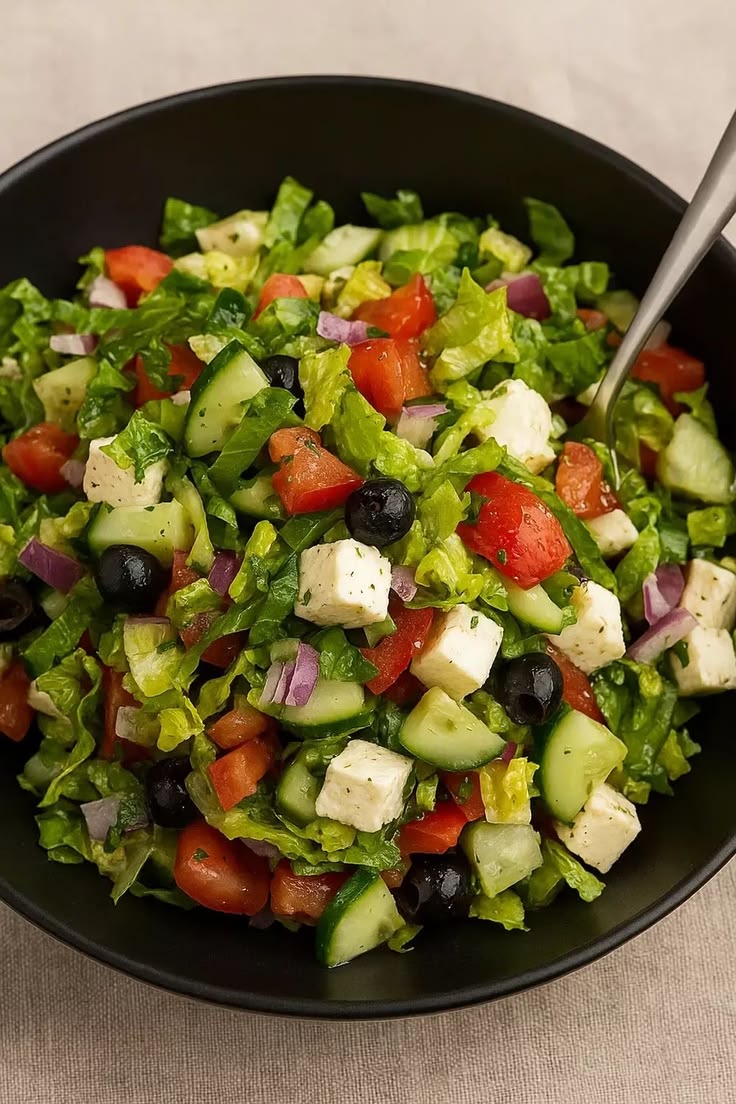
Based on the image, this salad appears to be a Mediterranean Greek Salad, featuring crisp romaine lettuce, cucumbers, tomatoes, red onion, black olives, and feta cheese tossed in a light herb vinaigrette. It is colorful, refreshing, nutritious, and perfect as a side dish or light meal.


Introduction
Greek salad is one of the most beloved dishes of Mediterranean cuisine. Known in Greece as Horiatiki, meaning “village salad,” it celebrates fresh vegetables, creamy feta cheese, and the rich flavors of olive oil and herbs. The beauty of this salad lies in its simplicity. Every ingredient contributes its own texture and flavor, creating a harmonious balance that is both satisfying and healthy.
The salad shown in the image is a modern variation that includes chopped romaine lettuce, making it heartier and more suitable as a complete meal. The combination of crunchy lettuce, juicy tomatoes, crisp cucumbers, tangy red onions, salty olives, and creamy feta creates a dish that is refreshing during warm weather yet enjoyable year-round.
Beyond its incredible taste, this Mediterranean Greek Salad is packed with nutrients. Tomatoes provide antioxidants such as lycopene, cucumbers offer hydration, olive oil contributes heart-healthy fats, and feta cheese adds protein and calcium. This makes it an excellent choice for anyone looking for a healthy, flavorful meal.
Preparation Time
- Preparation Time: 20 minutes
- Cooking Time: None
- Total Time: 20 minutes
- Servings: 6
Ingredients
For the Salad
- 1 large head romaine lettuce, chopped
- 2 large cucumbers, diced
- 4 medium tomatoes, chopped
- 1 medium red onion, finely diced
- 1 cup black olives
- 250 g (8 oz) feta cheese, cubed
- 2 tablespoons fresh parsley, chopped
- 1 tablespoon fresh oregano, chopped
For the Dressing
- 1/3 cup extra virgin olive oil
- 2 tablespoons red wine vinegar
- 1 tablespoon fresh lemon juice
- 1 teaspoon Dijon mustard
- 1 teaspoon dried oregano
- 1 teaspoon honey (optional)
- 1 garlic clove, minced
- Salt to taste
- Freshly ground black pepper to taste
Equipment Needed
- Large salad bowl
- Sharp knife
- Cutting board
- Small mixing bowl
- Whisk
- Measuring cups and spoons
Step-by-Step Instructions
Step 1: Prepare the Lettuce
Wash the romaine lettuce thoroughly under cold running water. Remove any damaged outer leaves. Dry completely using a salad spinner or clean kitchen towels.
Chop the lettuce into bite-sized pieces and place it into a large salad bowl.
Properly dried lettuce ensures the dressing clings to the leaves instead of sliding off.
Step 2: Prepare the Cucumbers
Wash the cucumbers thoroughly.
If using English cucumbers, peeling is optional. If using regular garden cucumbers with thicker skin, you may peel them partially or completely.
Cut the cucumbers lengthwise and then into half-moon slices or medium-sized chunks.
Add them to the salad bowl.
Step 3: Prepare the Tomatoes
Wash and dry the tomatoes.
Remove the stem area and cut them into medium chunks.
Choose ripe tomatoes for maximum flavor. Roma tomatoes, vine-ripened tomatoes, or heirloom tomatoes all work wonderfully.
Add the tomatoes to the bowl.
Step 4: Dice the Red Onion
Peel the onion and finely dice it.
If you prefer a milder onion flavor, soak the diced onion in cold water for 10 minutes before draining.
Add the onion to the salad mixture.
Step 5: Add the Olives
Drain the black olives and add them directly to the salad.
Traditional Greek salads often use Kalamata olives, but black olives work beautifully and resemble the ones shown in the image.
Step 6: Prepare the Feta Cheese
Cut the feta cheese into small cubes.
Avoid crumbling it too finely because larger cubes create a more attractive presentation and provide creamy bites throughout the salad.
Gently add the feta to the bowl.
Step 7: Make the Dressing
In a small bowl combine:
- Olive oil
- Red wine vinegar
- Lemon juice
- Dijon mustard
- Honey
- Garlic
- Oregano
- Salt
- Pepper
Whisk vigorously until the dressing becomes smooth and emulsified.
Taste and adjust seasoning as desired.
Step 8: Dress the Salad
Pour the dressing evenly over the salad ingredients.
Using large salad spoons, gently toss everything together until evenly coated.
Be careful not to break the feta cubes.
Step 9: Add Fresh Herbs
Sprinkle the chopped parsley and oregano over the salad.
Give it one final gentle toss.
The herbs add freshness and authentic Mediterranean flavor.
Step 10: Serve
Serve immediately for the freshest texture.
This salad pairs beautifully with:
- Grilled chicken
- Lamb
- Fish
- Shrimp
- Roasted vegetables
- Warm pita bread
Why This Salad Is So Popular
This Mediterranean Greek Salad is loved because it delivers:
- Crunch from lettuce and cucumber
- Juiciness from tomatoes
- Creaminess from feta
- Saltiness from olives
- Brightness from lemon and vinegar
- Richness from olive oil
Each bite offers a perfect balance of flavors and textures.
Nutritional Benefits
Lettuce
Romaine lettuce contains:
- Vitamin A
- Vitamin K
- Folate
- Fiber
It provides volume with very few calories.
Cucumbers
Cucumbers are:
- Hydrating
- Low-calorie
- Rich in antioxidants
They add refreshing crunch.
Tomatoes
Tomatoes contain:
- Lycopene
- Vitamin C
- Potassium
They contribute sweetness and acidity.
Red Onion
Red onions provide:
- Antioxidants
- Fiber
- Natural sweetness
Their sharp flavor balances the creamy feta.
Olives
Olives contain:
- Healthy monounsaturated fats
- Vitamin E
- Antioxidants
They are an important component of Mediterranean cuisine.
Feta Cheese
Feta offers:
- Protein
- Calcium
- Phosphorus
Its tangy flavor makes the salad memorable.
Olive Oil
Extra virgin olive oil contributes:
- Heart-healthy fats
- Polyphenols
- Anti-inflammatory compounds
It is considered one of the healthiest fats in the world.
Variations
Grilled Chicken Greek Salad
Add sliced grilled chicken breast for a protein-rich meal.
Chickpea Greek Salad
Mix in one can of drained chickpeas for extra fiber and protein.
Avocado Greek Salad
Add diced avocado for creaminess.
Quinoa Greek Salad
Include cooked quinoa to transform the salad into a filling lunch.
Seafood Greek Salad
Top with grilled shrimp or salmon.
Storage Tips
If storing leftovers:
- Keep dressing separate whenever possible.
- Refrigerate in an airtight container.
- Consume within 24 hours for best texture.
- Add fresh feta before serving.
Common Mistakes to Avoid
Overdressing
Too much dressing can make the salad soggy.
Using Cold Flavorless Tomatoes
Room-temperature ripe tomatoes provide superior flavor.
Skipping Fresh Herbs
Fresh herbs dramatically improve the final result.
Overmixing
Gentle tossing preserves the feta cubes and vegetable texture.
Serving Ideas
This salad is ideal for:
- Summer picnics
- Family dinners
- Barbecues
- Potlucks
- Lunch meal prep
- Holiday gatherings
Serve it alongside grilled meats, seafood, or warm Mediterranean bread for a complete meal.
Final Thoughts
This Mediterranean Greek Salad with Feta, Cucumbers, Tomatoes, Black Olives, and Red Onion is a classic dish that showcases the vibrant flavors of Mediterranean cooking. It is fresh, healthy, colorful, and incredibly easy to prepare. Whether served as a side dish or enjoyed as a light meal, this salad delivers crisp vegetables, creamy feta, and a zesty homemade dressing in every bite.
The combination of simple ingredients and bold flavors is exactly why Greek salad remains one of the world’s most popular salads. Once you make it at home, it may become a regular part of your weekly menu.
ADVERTISEMENT
